Springs · Canfield
Garage Door Balance Adjustment in Canfield
Since the new insulated panels went in, the door feels like a different animal. It closes with a thud, the opener labours where it used to hum, and lifting it by hand takes a proper heave rather than a fingertip.
Garage Door Balance Adjustment
In plain words
The whole service is built around one simple test that door manufacturers and safety bodies describe the same way. With the opener released, the door is lifted by hand to roughly a metre off the floor and let go. A balanced door stays where it is. One that drifts upward is carrying too much spring tension; one that sinks is carrying too little. The technician reads that behaviour at several heights, checks the door is level across its width, and then adjusts the counterbalance a quarter turn at a time, testing to the manufacturer's specified height and tolerance, until the door meets that standard and moves smoothly.
How the visit goesOn cold mornings the door barely makes it up. The motor whines, the door crawls, and once or twice it has given up halfway. By afternoon, with the sun on the garage, it runs almost normally again.
Canfield
How the visit goes
Releasing the door and reading how it behaves
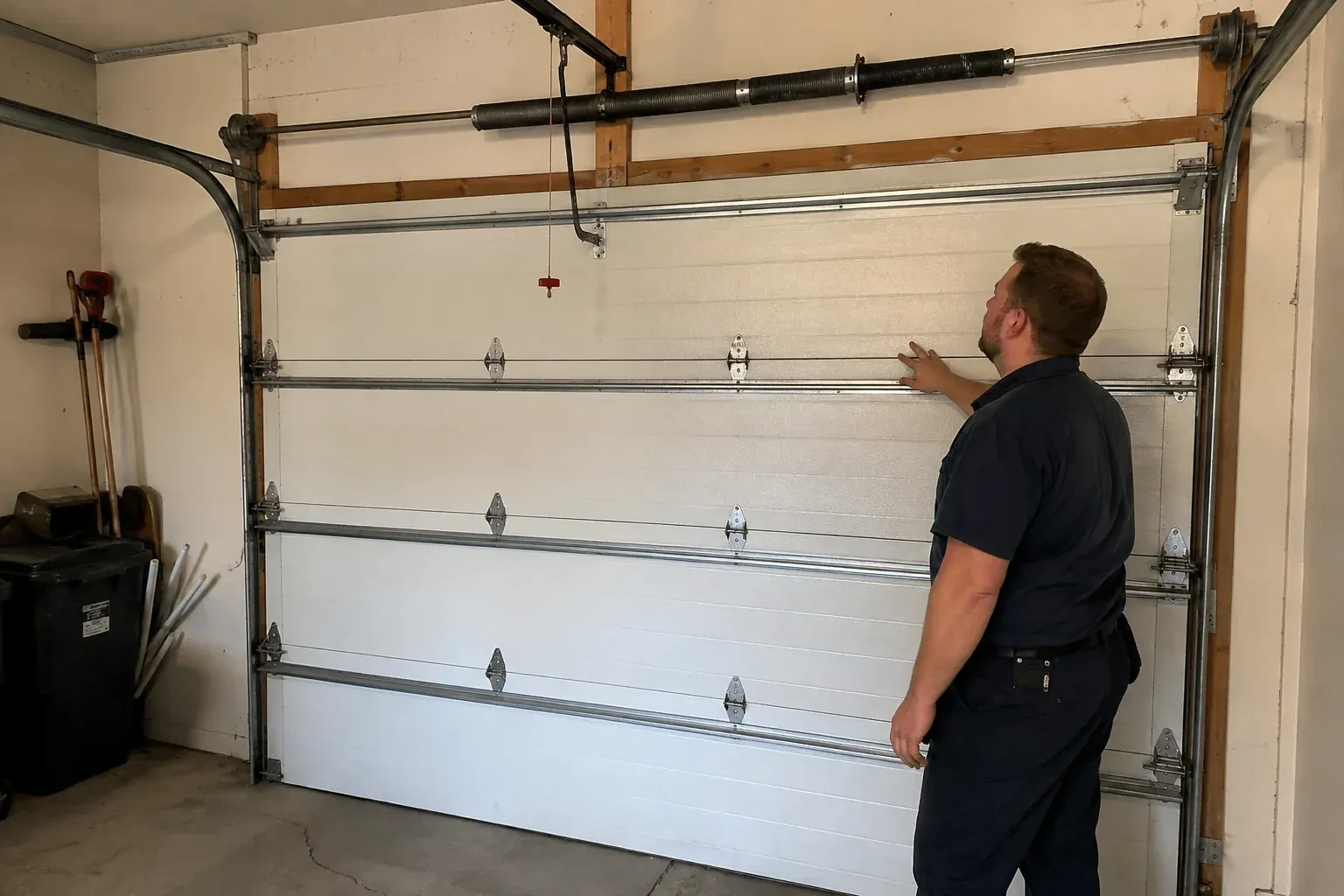
The assessment begins with the opener out of the picture. The technician closes the door, pulls the red manual release so the trolley disconnects, and lifts the door by hand to about a metre, then to full height, then lets it settle. A balanced door pauses wherever it is stopped; a door that climbs on its own has too much tension, one that drops has too little, and one that is fine low down but drifts up near the top can point to drum profile, cable length, uneven section weight or the spring's own characteristics rather than one single cause. How much effort the lift takes and whether it stays fully open are noted before anything is adjusted.
Removing the friction that made the door feel heavy
Where the inspection found drag, it is dealt with before the springs are judged. Seized or worn rollers are swapped for new ones, one hinge at a time so the door never leaves its track. Track sections knocked out of line are eased back plumb and their brackets tightened to the jamb; a dent is dressed out or the section replaced. Hinges with play are replaced and their screws driven into sound material. The springs, hinge pins, roller stems and bearings then receive a light coat of garage-door lubricant. After this the door is lifted again, and it is common for the heaviness to be largely gone before any turns are added.
Watching for the early signs of drift
You will now know what the door feels like when it is right, which makes small changes easy to spot. A door that begins to close with a heavier thud, an opener that pauses at the top or hums a little longer, a gap appearing under one corner, or a door that no longer quite stays fully open when released are all early signs. Cold weather can make the door feel a little heavier for a few weeks without anything being wrong. But a door that stalls, races or no longer passes its balance check is telling you to stop using it and book an inspection promptly rather than waiting out the season, since the cause is not always minor.
Garage Door Balance Adjustment
In the van
- Garage-door lubricant
- Cable drums
- Torsion springs, matched pair
- Winding cone set screws
- Lift cables
What affects the quote
Same fees day, night or weekend
1Weight added to the door
Insulation kits, windows or replacement sections may have taken the door beyond what its springs can carry. Weighing the door and specifying new springs to suit is quoted separately from a simple adjustment.
2Single or double door
A double door commonly carries more spring than a single, but the exact count follows the manufacturer's engineered hardware package for that door's weight rather than width alone: one, two or more torsion springs, or one or two extension springs per side. More springs means more adjustment and testing.
3Door height and lift type
Taller doors and high-lift or vertical-lift hardware carry more spring turns and different drums, so setting and testing them takes longer than a standard seven-foot door.
Garage Door Balance Adjustment: questions
Why does my door sink or slam down when released?
Not enough spring tension for the door's weight. Springs lose a little pull as they age through thousands of cycles, and a door gains weight when insulation, windows or a heavier seal are added. Either way the door outweighs its springs. Adding tension in measured quarter turns restores the hold, provided the springs are sound; if they are near the end of their life, new ones are the right answer.
How long does a balance adjustment take?
A straightforward tension adjustment on a sound door is generally about an hour, including the inspection, the hand tests and the opener checks at the end. Resetting cables to level the door, replacing rollers to remove friction, or moving to a spring replacement adds time. The technician will tell you what the inspection found and how the visit is shaping up before the work continues.
How is door balance tested?
With the door closed, the opener is released so the door is free. It is lifted by hand to about a metre, then to fully open, and let go at each point. A door in balance holds its position; one that rises on its own is over-tensioned and one that drops is under-tensioned. The door should also move freely and no faster than the hand pushing it.
Springs & Hardware
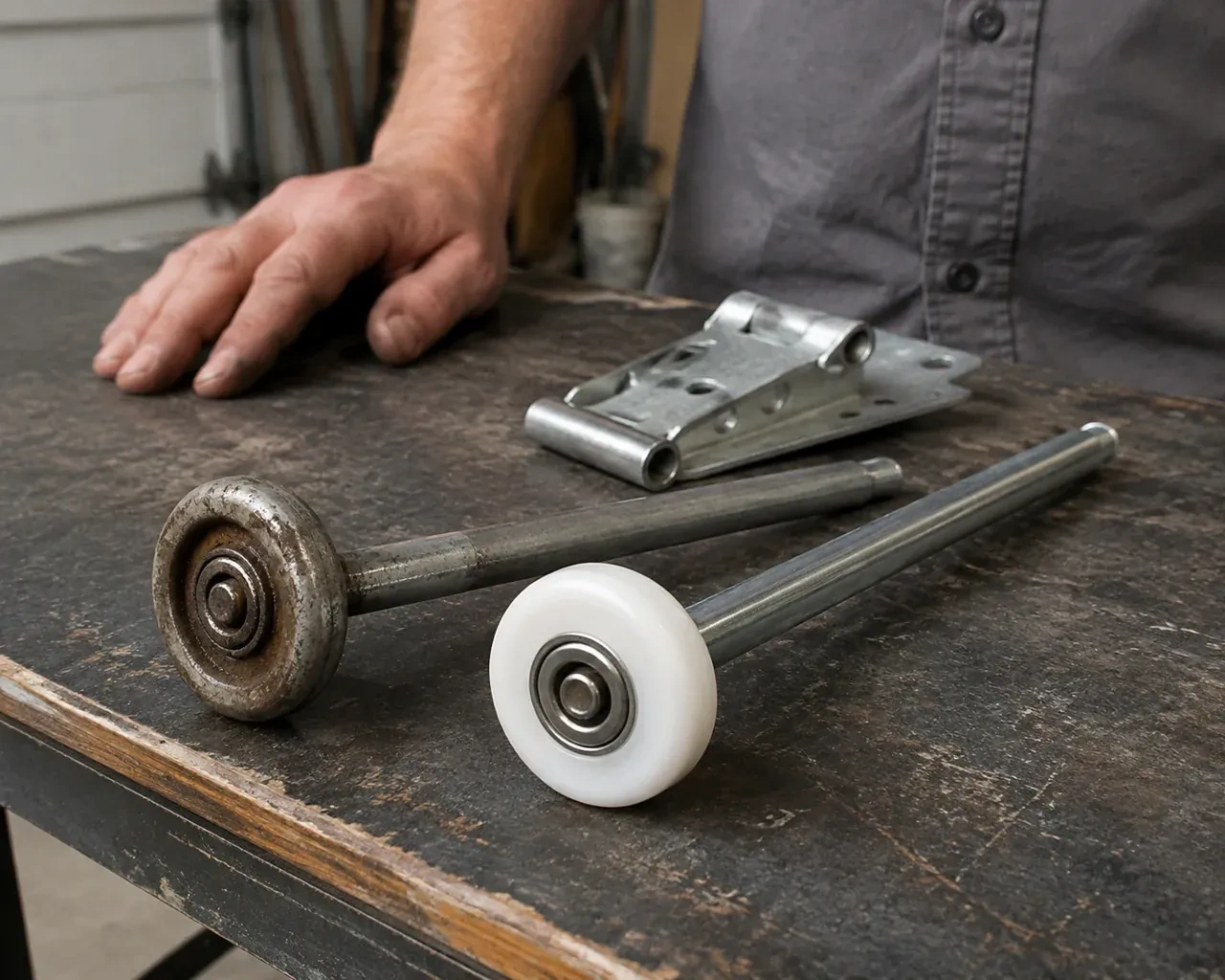
- Garage Door Hinge ReplacementWatching from inside as the door opens, you can see the gap between the second and third panels…
- Garage Door Track Repair or ReplacementAfter a decade of slushy winters the bottom foot of the track is flaking rust.
- Garage Door Cable ReplacementSomeone left the snow shovel leaning in the opening and the door came down on it.
Garage Door Balance Adjustment near you
Owners of older homes in Canfield often need work on extension springs, wood doors and early openers, while newer homes tend to need torsion springs, belt-drive openers and insulated steel panels. We service both generations of door, and the pages below explain what applies to yours.