Springs · Cayuga
Garage Door Balance Adjustment in Cayuga
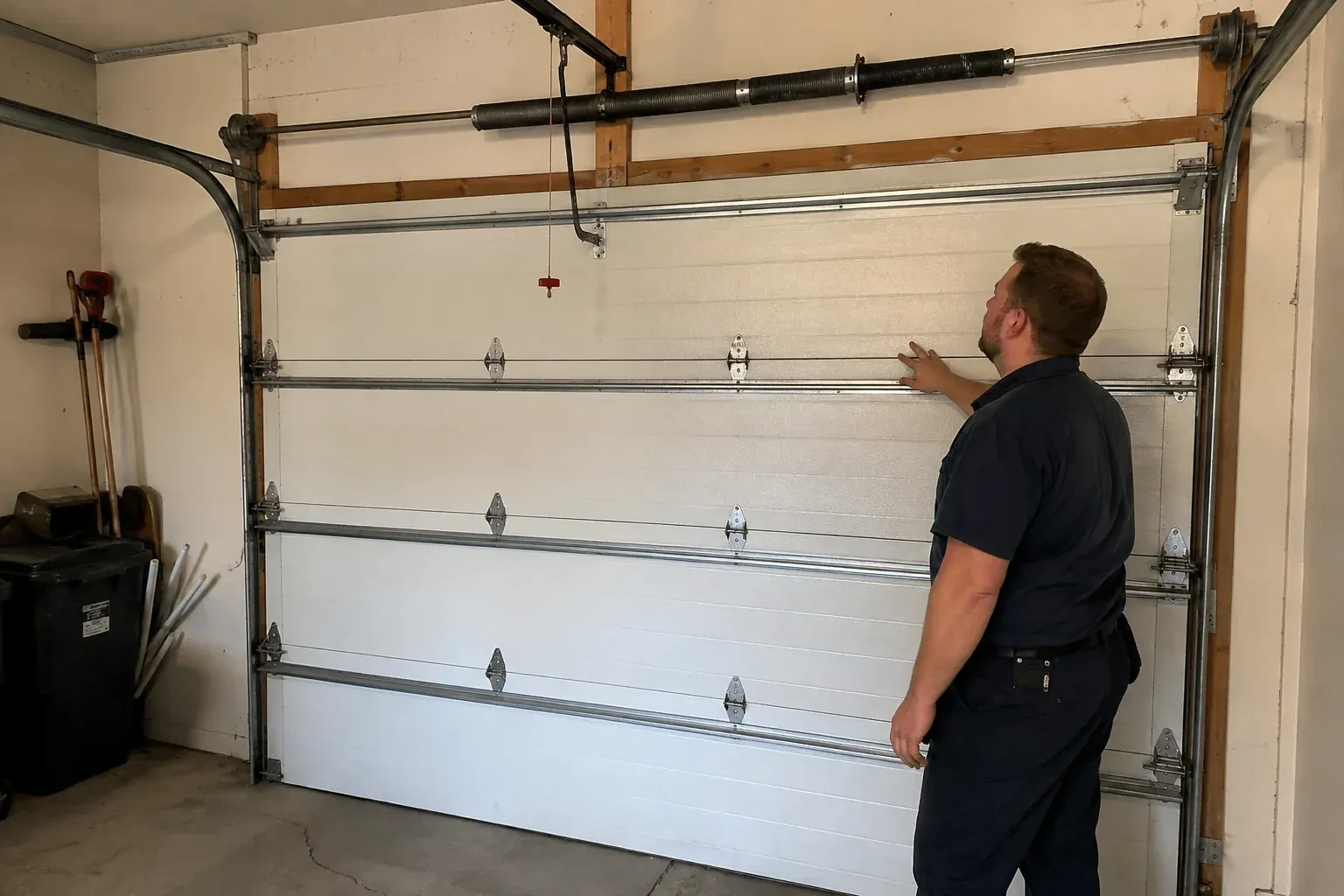
Since the new insulated panels went in, the door feels like a different animal. It closes with a thud, the opener labours where it used to hum, and lifting it by hand takes a proper heave rather than a fingertip.
Garage Door Balance Adjustment
In plain words
Balance changes for ordinary reasons. Springs are rated for a certain number of cycles and lose a little tension as they age. A new bottom seal, insulated panels, a window section or a decorative overlay adds weight the original springs were never sized for. Rollers stiffen, hinges wear, and in a cold snap the whole system feels heavier for a few weeks. Any of these tips the door from weightless to a chore. A balance adjustment starts by identifying which of them is at work, then resets the springs to suit the door as it is today, and corrects the friction so the adjustment holds.
How the visit goesOn cold mornings the door barely makes it up. The motor whines, the door crawls, and once or twice it has given up halfway. By afternoon, with the sun on the garage, it runs almost normally again.
Cayuga
How the visit goes
Inspecting the springs before any turns are added
Adjustment only makes sense on a spring that is sound, so each one is examined closely. On a torsion system the technician looks for a gap in the coil, rust pitting, uneven coil spacing and a cone that has slipped on the shaft, and measures the wire size, inside diameter and length to confirm the spring suits the door's weight. On extension springs the check is for stretched or opened coils, a broken end loop and the presence of a containment cable. A spring that has simply lost a little tension can be wound up; one that is undersized or near the end of its cycle life is explained and offered as a replacement instead.
Adjusting extension springs at the hook
On an extension system the door is opened fully and clamped so each spring hangs slack, and the tension is changed by moving the S-hook or the cable clip to a different hole in the track hanger, or by shortening the cable at the clip. A hole further back stretches the spring more when the door closes and adds lift; a hole further forward reduces it. Both sides are moved the same amount so the door stays level, and the pulleys and containment cables are checked as the hooks are reset. The clamps come off and the door is tested by hand at several heights, then adjusted again if needed.
What the springs still have left
Part of the visit's value is knowing where the springs stand. If they were adjusted and left in place, you will have been told roughly how much life they appear to have and what signs mark their end: a door that grows heavy again within a season, a coil gap, or rust flaking from the wire. If they were replaced, the door starts a new cycle count and the note by the opener says when they went in. Either way, you can plan the next spring work on your own schedule rather than on the morning the car needs to leave and the door refuses to lift.
Garage Door Balance Adjustment
In the van
- Garage-door lubricant
- Cable drums
- Torsion springs, matched pair
- Winding cone set screws
- Lift cables
What affects the quote
Same fees day, night or weekend
1Extension-spring containment and pulleys
On an extension door, a missing containment cable is added and worn pulleys are replaced with the adjustment. Each is a small parts line on the quote.
2Weight added to the door
Insulation kits, windows or replacement sections may have taken the door beyond what its springs can carry. Weighing the door and specifying new springs to suit is quoted separately from a simple adjustment.
3Commercial or oversized doors
Doors wider or heavier than a standard residential opening use heavier springs, sometimes several on one shaft, and take longer to wind and test, which the quote reflects.
Garage Door Balance Adjustment: questions
Why does my door sink or slam down when released?
Not enough spring tension for the door's weight. Springs lose a little pull as they age through thousands of cycles, and a door gains weight when insulation, windows or a heavier seal are added. Either way the door outweighs its springs. Adding tension in measured quarter turns restores the hold, provided the springs are sound; if they are near the end of their life, new ones are the right answer.
How long does a balance adjustment take?
A straightforward tension adjustment on a sound door is generally about an hour, including the inspection, the hand tests and the opener checks at the end. Resetting cables to level the door, replacing rollers to remove friction, or moving to a spring replacement adds time. The technician will tell you what the inspection found and how the visit is shaping up before the work continues.
How is door balance tested?
With the door closed, the opener is released so the door is free. It is lifted by hand to about a metre, then to fully open, and let go at each point. A door in balance holds its position; one that rises on its own is over-tensioned and one that drops is under-tensioned. The door should also move freely and no faster than the hand pushing it.
Springs & Hardware
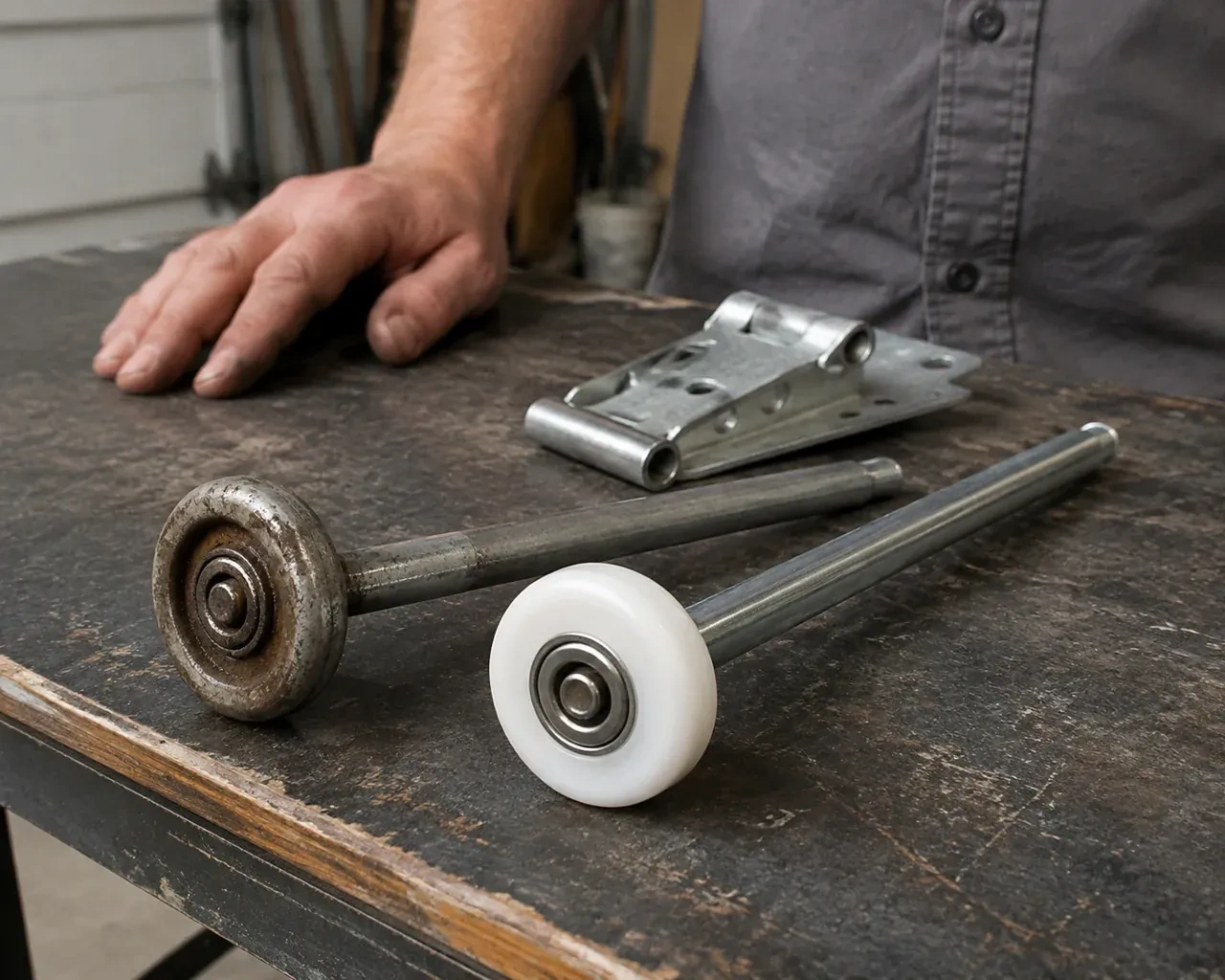
- Garage Door Hinge ReplacementWatching from inside as the door opens, you can see the gap between the second and third panels…
- Garage Door Track Repair or ReplacementAfter a decade of slushy winters the bottom foot of the track is flaking rust.
- Garage Door Cable ReplacementSomeone left the snow shovel leaning in the opening and the door came down on it.
Garage Door Balance Adjustment near you
Most calls from Cayuga start with a symptom rather than a part name: a bang, a door stuck halfway, a remote that only works from the driveway. Below are the services behind those symptoms, from spring and cable replacement to opener repair, panel work and complete door installation.