New Doors · Haldimand County
Commercial Sectional Door Repair
The door reaches the floor, then reverses before staying closed. The threshold is clear, but a sensing edge is distorted and one photoelectric sensor has moved out of line with its partner.
Commercial Sectional Door Repair
In plain words
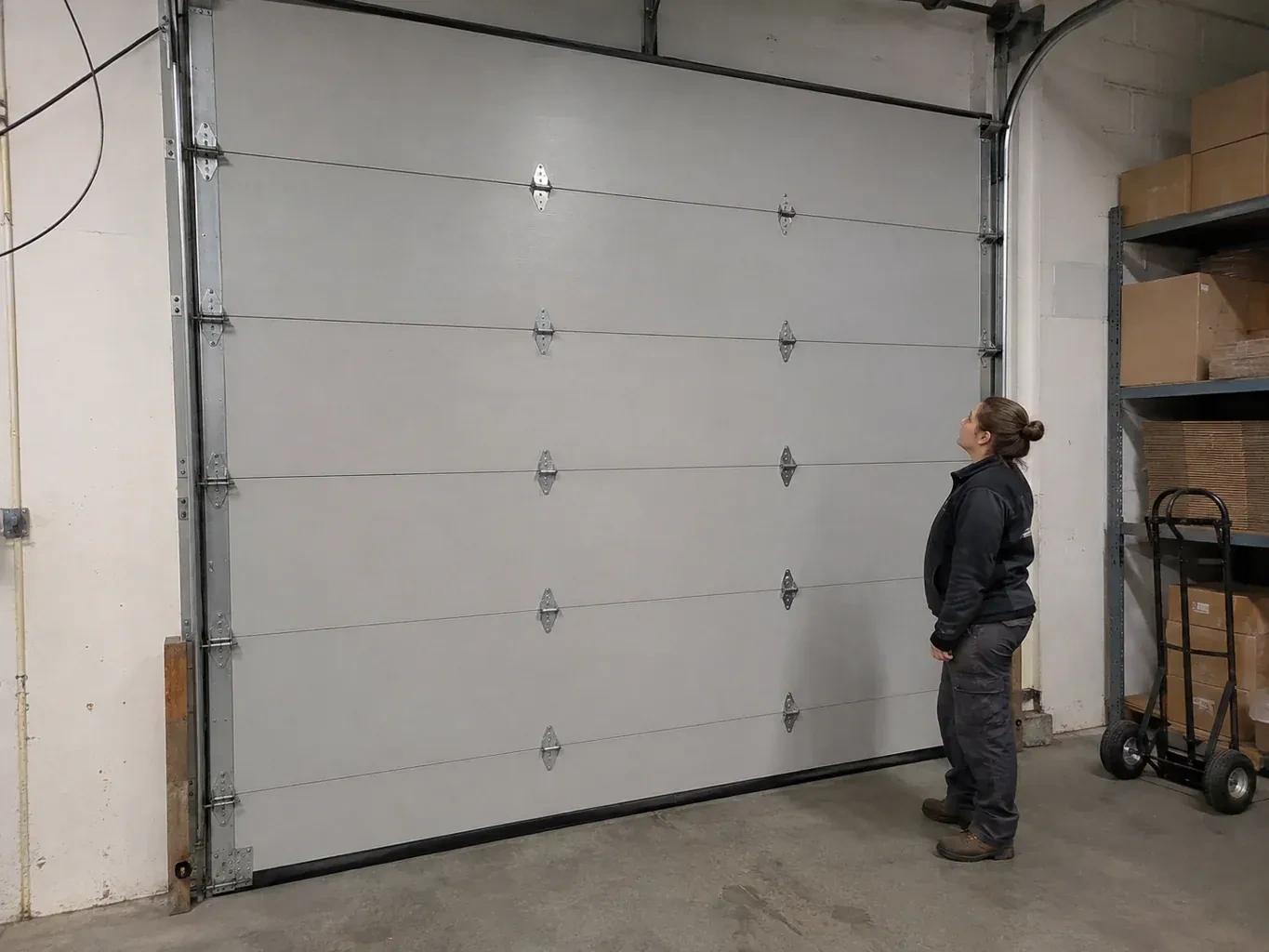
For a facility with several sectional doors, the repair visit can separate one isolated failure from wear shared across similar openings. Door identification, cycle demand and service history help explain why one bay developed loose hinges, tired rollers or spring imbalance first. The affected opening receives the defined repair, while comparable components on adjacent doors can be visually noted for planning. A clear service record then identifies what changed, which settings were tested and what routine observations facility staff can continue between visits.
How the visit goesEach opening cycle brings a metallic knock followed by a shudder through the horizontal track. The sound grows near the curve, where a worn roller and loose hinge allow the section to shift under load.
Haldimand County
How the visit goes
Inspecting the closed opening
A door that leaks air or admits slush is examined in its fully seated position. The technician compares the bottom edge with the floor, checks compression along the seal and looks for a bent retainer or distorted lower section. Side and header weatherstrip contact is observed without forcing the sections against the jambs. Light gaps can also reveal a door that is out of level or a track set too far from the opening. The assessment connects seal condition with landing position so the repair improves fit without creating binding during travel.
Re-establishing the weather seal
A damaged bottom seal is removed from its retainer, and the retainer is straightened or replaced when impact has distorted it. The new seal is sized for the door and floor condition, then fed evenly so it reaches both corners without stretching. Side and header weatherstrip are positioned for continuous contact while leaving the door free to move. If an uneven landing caused the original gap, cable level or track position is corrected first. The final fit is viewed from both sides with the door closed and checked again after cycling.
High-lift cables that remain controlled
Corrected lift geometry leaves the cables tensioned and seated as the door moves from vertical travel into its upper position. Because overhead components can be difficult to view from the floor, the service record should capture the drum, cable and spring details used in the repair. Staff can monitor the visible lower cable runs and listen for changes near the transition. A planned inspection can then review track supports, shaft bearings and cable condition at height with suitable access equipment, preserving the adjustments made during repair.
Commercial Sectional Door Repair
In the van
- Lift cables and drums
- Commercial rollers
- Vertical and horizontal track
- Reinforcement struts
- Bottom fixtures
What affects the quote
Same fees day, night or weekend
1Door size and moving weight
Opening dimensions, panel construction, reinforcement and overall door weight determine component ratings, handling methods and how much support is required during the repair.
2Number of affected openings
A single bay with one defined fault differs from a facility request covering several numbered doors, separate symptoms and individual operational tests.
3Counterbalance components involved
Spring count, shaft arrangement, drum type, cable dimensions, bearings and bottom fixtures determine which tensioned parts must be controlled, replaced and reset together.
Commercial Sectional Door Repair: questions
Should the operator be adjusted when the door feels heavy?
The mechanical door should be assessed before operator force, clutch or travel settings are changed. Extra resistance can come from spring imbalance, cable trouble, worn rollers, track contact or an engaged lock. Once the door moves freely and is correctly balanced, the operator can be set to that sound baseline and its limits and protective devices can be checked.
How often should commercial door hardware be inspected?
The appropriate interval follows the door and operator manuals, operating cycles, environment and facility maintenance plan. A heavily used exterior bay may need attention more often than a lightly used interior opening. Staff can still observe cables, seals, sensors, sound and travel during normal operation, while tensioned components and adjustments remain part of a technician's planned inspection.
Can bent track be straightened or must it be replaced?
That depends on the location and degree of deformation. A minor change in an accessible straight section may be corrected while restoring spacing and support. A sharply creased rail, damaged curve, opened seam or track that can no longer hold the roller securely usually calls for a compatible replacement. Brackets, anchors and adjoining track are checked either way.
Installation & Upgrades
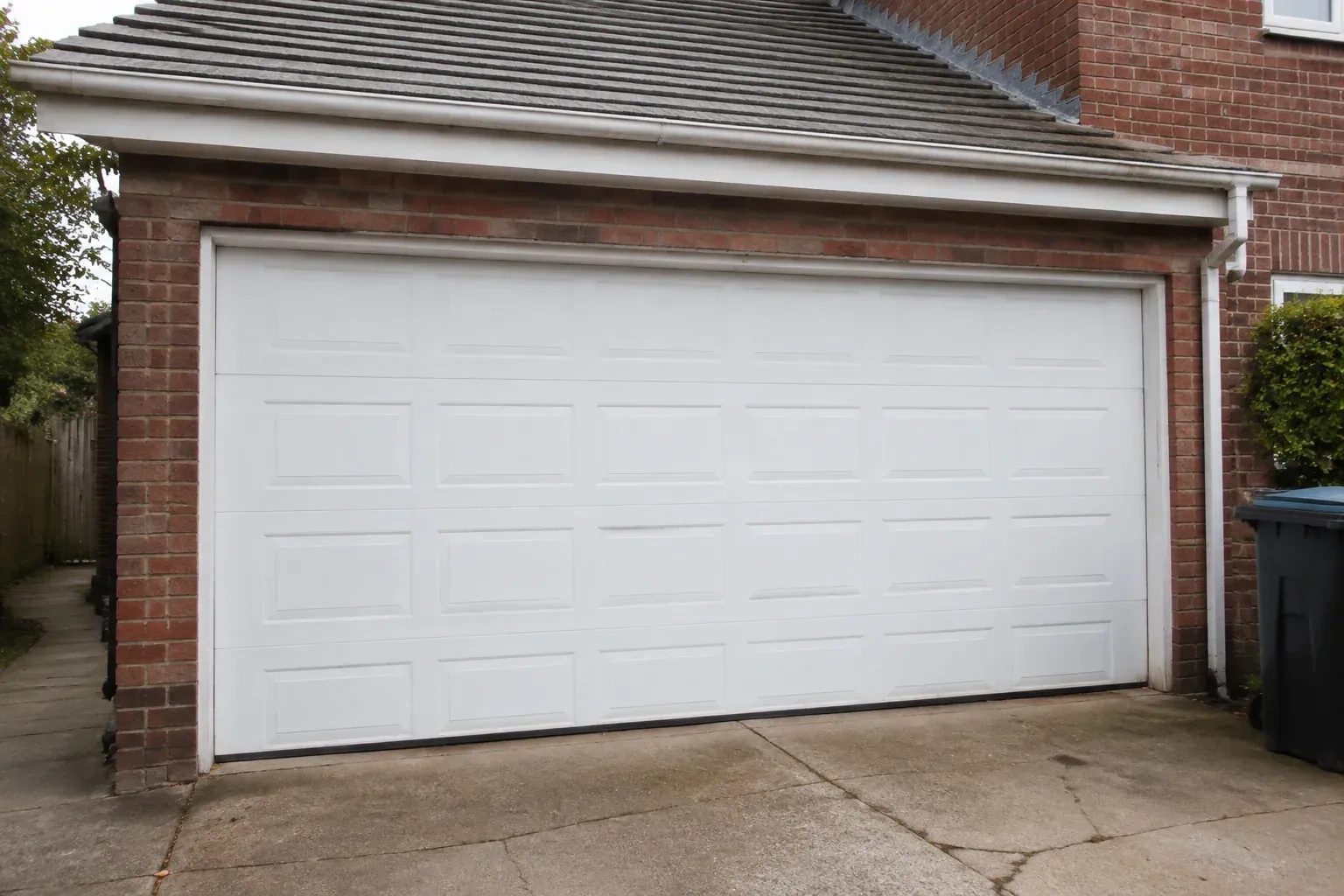
- Insulated Steel Garage Door InstallationThe existing door opens on old tracks that crowd storage near the ceiling.
- Wind-Rated Garage Door ReplacementYour renovation drawings call for a garage door with a stated design pressure, yet the existing…
- Carriage-House Garage Door InstallationThe garage feels dim whenever the overhead door is closed.
Commercial Sectional Door Repair near you
For homes and businesses in Haldimand County we handle the full run of garage door work: broken springs and cables, doors that have left the track, openers and remotes that stopped answering, worn rollers and seals, tune-ups, and new doors chosen and installed to suit the building.