Springs · Cayuga
Garage Door Roller Replacement in Cayuga
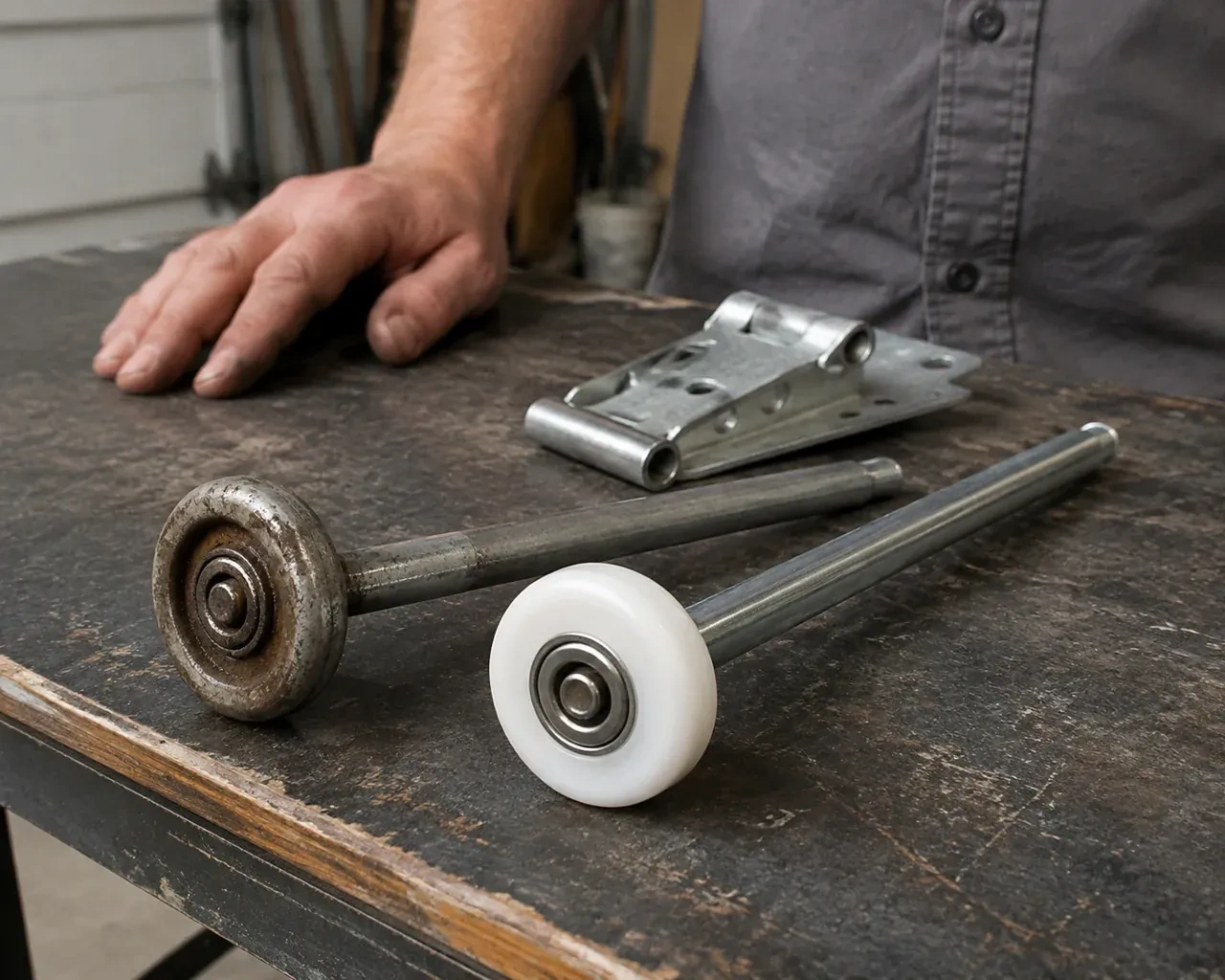
New springs went in last year and the door balances well, yet it still clicks along the ceiling track like a train over rail joints. The wheels are the originals, worn to an oval, and the noise follows them from one end of the travel to the other.
Garage Door Roller Replacement
In plain words
A garage door opener is designed to guide a balanced door, not to haul a rough one. Rollers that bind, wobble or grind add resistance across the whole travel, and the opener answers by working harder, running hotter and tripping its force limit or reversing partway. Replacing worn rollers with a smooth-running set takes that load away, which is why the opener often sounds calmer after the same visit. The technician confirms the door holds its own weight with the opener released, then checks the opener's force and reversal settings once the new rollers are in.
How the visit goesThe door shudders as it rises, worst where the track bends from vertical to horizontal. Watching from inside, you can see one section rock from side to side while the others sit still, and the whole door lands with a clunk.
Cayuga
How the visit goes
Does the door hold its own weight?
With the opener released, the technician lifts the door to knee height and then to halfway and lets go. A balanced door stays where it is put; one that drifts down or climbs is telling you the springs are out of adjustment. This check comes before roller work for a practical reason: an unbalanced door leans on its rollers and hinges with weight the springs should be carrying, and new rollers fitted to such a door wear early. If the balance is off, the technician explains what the spring system needs so you can decide whether to have it corrected in the same visit.
Securing the door before a roller comes out
Nothing is unbolted until the door cannot move. The technician disconnects the opener, positions the door where the work is safest for the rollers being changed, and locks it there with clamps or locking pliers set in the track under the wheels so the sections cannot slide or drop. With a heavy door left in the open position, the horizontal track and its hangers are checked for a firm hold first. This set-up takes a few minutes and is the reason the rest of the job can proceed calmly, one roller at a time, without a section shifting while a hinge is loose.
Looking after nylon rollers
Modern nylon rollers ask for very little. Twice a year, glance along each track with the door closed for a wheel that sits crooked, a cracked tire or a stem that has begun to wobble. Give the hinge knuckles a short burst of garage door lubricant once or twice a year, and leave the wheels and track dry; lubricate bearings only if the roller's maker calls for it, since some are sealed or built to run without added grease. Keep the bottom of each track swept clear of leaves, grit and, in winter, slush. Rollers with sealed bearings need even less, since the seal keeps dirt and moisture away from the balls; a wipe and a look is enough.
Garage Door Roller Replacement
In the van
- 1-1/2 inch reversal test block
- Steel ball-bearing rollers
- Jamb bracket fasteners
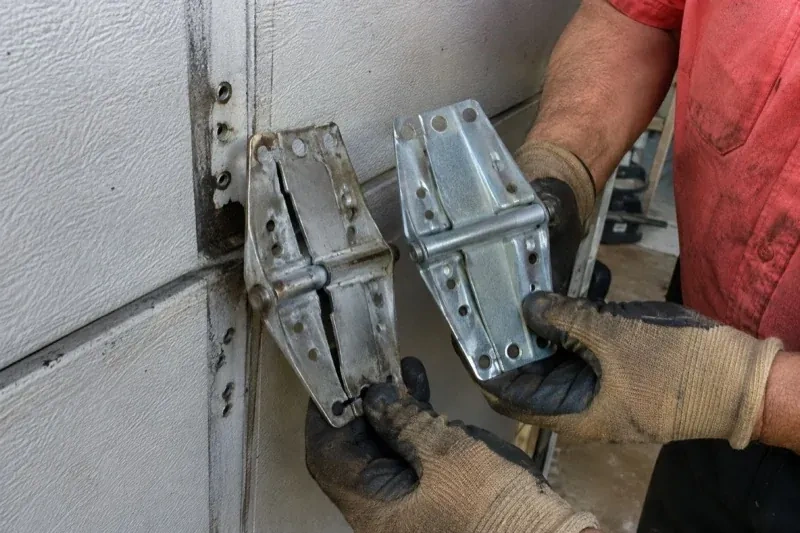
- Replacement numbered hinges
- Three-inch rollers for commercial track
What affects the quote
Same fees day, night or weekend
1Relieving spring tension for the bottom rollers
When the bottom brackets have to be unbolted, the technician takes the spring load off first with winding bars, skilled extra work that is included in the figure for that position.
2Track alignment and repair
Realigning jamb brackets, straightening a dented lip or replacing a damaged length of track is separate from the roller work and quoted as such when the inspection finds it.
3Combining with spring or cable work
If springs or cables are being replaced in the same visit, the door is secured once and the roller set is added to that job, which is often more economical than a separate call.
Garage Door Roller Replacement: questions
Do nylon rollers need lubricating?
The nylon tire itself needs none; spraying it or the track only collects dust that grinds the wheel. The hinge knuckles and stems where they turn benefit from a light coat of garage door lubricant once or twice a year, worked in by running the door. The ball bearings themselves are lubricated only where the roller's own maker calls for it, since some nylon rollers should not be greased there. Rollers with sealed bearings come greased from the factory and need only a wipe and a look.
How long do garage door rollers last?
It depends on what they are made of and how often the door moves. Builder-grade plastic wheels with no bearings often show wear after only a few years. Steel and nylon rollers with seven to thirteen ball bearings are typically rated for ten to fifteen thousand cycles, roughly the life of a torsion spring, which for many households means seven to ten years. Sealed-bearing nylon rollers are rated far higher. A door used many times a day, or one living with salt and slush, shortens all of those.
What is the difference between two-inch and three-inch rollers?
The figure is the wheel diameter, and it has to match the track. Residential sectional doors run on two-inch track and take a two-inch wheel; commercial doors can run on either two-inch or three-inch track, so the wheel is matched to what is actually installed. Wheel size has little to do with noise, which comes from the wheel material and bearings. The technician measures the track and the existing wheel before ordering so the set fits, since a mismatched wheel either jams in the channel or rattles around in it.
Springs & Hardware
- Garage Door Track Repair or ReplacementAfter a decade of slushy winters the bottom foot of the track is flaking rust.
- Garage Door Cable ReplacementSomeone left the snow shovel leaning in the opening and the door came down on it.
- Torsion Spring ReplacementNothing broke outright, but the door has grown heavier each winter, opens more slowly and squeals…
Garage Door Roller Replacement near you
Most calls from Cayuga start with a symptom rather than a part name: a bang, a door stuck halfway, a remote that only works from the driveway. Below are the services behind those symptoms, from spring and cable replacement to opener repair, panel work and complete door installation.